
How Do We Plan the Memorial Service?
By Rock Pifer · Last reviewed October 2026
Once you've decided what kind of memorial you want, the next question is, “How do we actually put it together?”
That can seem like a lot when you're already dealing with the death of someone you love.
The good news is that you don't have to figure it all out at once. A memorial service is really a collection of fairly simple decisions. Work through them one at a time, and before long you'll have a plan.
Where Should We Hold the Memorial?
The location can be almost anywhere that makes sense for your family and the kind of gathering you're planning.
A church, funeral home, community building, someone's home, a park, pavilion, backyard, or another meaningful place can all work.
If you're using a public location or renting a facility, find out ahead of time about availability, rules, fees, seating, parking, and anything else that might affect your plans.
Don't overlook the possibility of gathering in someone's home. Sometimes a living room or kitchen table provides exactly the kind of setting a family wants.
The important thing isn't the building. It's the people who gather and the person they have come to remember.
Who Should Lead the Memorial Service?
A pastor, priest, minister, or other spiritual leader may be the right person to conduct the service.
But that's not the only possibility.
A family member or trusted friend may be comfortable leading the gathering. Someone else might welcome the people, introduce the speakers, and keep things moving while different family members handle the individual parts of the service.
There is no requirement that one person do everything.
Choose someone who is comfortable with the responsibility and understands what your family wants.
What Should We Include in the Memorial Service?
There are many possibilities:
Welcome — A simple greeting and an explanation of why everyone has gathered.
Prayer — If prayer is appropriate for your family and the service.
Scripture — A meaningful passage or passages, particularly for a Christian service.
Music — Hymns, favorite songs, instrumental music, or other selections that fit the person being remembered.
Eulogy or message — An opportunity to talk about the person's life and what they meant to others.
Stories and memories — Family and friends can share personal memories.
Photographs or video — Pictures can help tell the story of a person's life.
Poem or reading — A meaningful poem, letter, or other reading may be appropriate.
Time of sharing — An opportunity for people to say something about the person they came to remember.
Closing — A final prayer, song, words of remembrance, or other way of bringing the gathering to an end.
You don't need to use all of these.
In fact, don't add something simply because you think you're supposed to. Choose the elements that are meaningful to your family and appropriate for the person you're remembering.
How Long Should a Memorial Service Be?
There isn't a required length.
A service might be fairly brief, or it might take longer because there are several people who want to speak or because the family has chosen to include more music, readings, or other elements.
What matters is that the service has a natural flow and doesn't become so long that people lose sight of why they gathered.
A simple, meaningful service doesn't need to fill a certain amount of time.
How Do We Choose the Music?
Start with the person you're remembering.
What did they listen to? What did they sing? Were there hymns or songs that were important to them? Was there a particular piece of music that brings back memories?
For a Christian service, hymns and worship music may be especially meaningful. In other settings, favorite secular songs, instrumental music, or live performances may be appropriate.
The music doesn't have to be what you think a memorial service is supposed to sound like.
Choose music that helps tell their story.
Should We Have an Open-Mic Time for Memories?
A time when family and friends can stand up and share a memory can be one of the most meaningful parts of a memorial.
It can also become difficult if there is no structure.
If you decide to have an open-mic time, consider explaining ahead of time how it will work. You may want to set a reasonable amount of time for each person or have someone guide the conversation.
And remember what we talked about elsewhere in this resource center: not everyone who has something to say will be able to stand up and say it.
Someone may be able to write a beautiful memory but not be able to speak it aloud. Give them another way to participate.
What About a Memorial Program?
A program doesn't have to be complicated.
It might include the person's name, dates of birth and death, the date and location of the service, the order of the service, Scripture readings, song titles, the names of people participating, and a short obituary or biography if the family wants one.
Some families want a printed program for everyone who attends. Others may choose something much simpler.
The program is there to help people participate and remember. It doesn't have to become another project that overwhelms the family.
What About Food or a Reception?
If people are gathering, someone will probably ask about food.
Keep it as simple as you need to.
Family and friends can bring food. You can have sandwiches, soup, cookies, coffee, and drinks. You can order pizza. A church or community group may already have people who are willing to help.
There's nothing wrong with a more elaborate meal if that's what your family wants, but you don't have to spend a lot of money feeding everyone.
The food isn't the memorial. The people are.
Write It Down
Once you've made your decisions, put them on paper.
Write down the order of the service. List the people who are speaking. Record the songs and Scripture readings. Note anything else that needs to happen.
Then give a copy to the person leading the service and to anyone else who needs one.
That simple outline can make a big difference when the day arrives. Grief has a way of making it difficult to remember what comes next.
Let People Help
Planning a memorial doesn't have to become the responsibility of one person.
Someone can gather photographs. Another person can contact family members. Someone else can organize the music or prepare the program. Others can arrange the food, set up the room, greet people, or help with cleanup.
Let them.
People often want to help but don't know what to do. Give them something specific they can take care of.
You Don't Have to Make It Perfect
There's a temptation to think every detail has to be exactly right.
It doesn't.
Someone may forget a word. A song may not play exactly when you expected. A speaker may become emotional and need to stop for a moment.
That's okay.
You're not putting on a performance.
You're gathering people together to remember someone you love.
“Make it meaningful, not perfect”
Take the decisions one at a time. Choose the people who can help. Write down the plan.
And when the day comes, remember why you're there.
You're there to remember a life, tell a story, share memories, and say goodbye.

How Do We Include Family Members Who Can't Attend?
When a family is planning a memorial, one of the questions that often comes up is, “What about the people who can't be here?”
Maybe a son lives across the country. A daughter may be overseas. A grandchild may be away at school. Someone may be serving in the military or simply cannot get away from work or other responsibilities.
Their absence doesn't mean they don't need to be part of remembering the person they love.
Start by Finding Out Who Wants to Be Involved
Don't assume that someone who can't attend doesn't want to participate.
Give them a call.
Ask what they would like to do and what they would like included in the memorial. They may have a story to tell, photographs to share, a favorite song, or something else that was important to them.
Sometimes a person who cannot be there will have something meaningful to contribute that the people who are present may never have heard before.
Use Technology When It Helps
Today, distance doesn't necessarily mean someone has to be completely absent.
A phone call, video call, or online meeting can allow family members to participate in the planning process even when they can't travel.
Depending on the circumstances, you might also be able to include someone in the memorial itself through a video call or livestream.
Technology isn't always necessary, and it doesn't have to become complicated. But when distance is the only thing keeping someone from participating, it's worth considering.
Let Them Send Something to Be Shared
Not everyone who can't attend will be able to participate by video.
That's okay.
Ask whether they would like to send a letter, memory, photograph, poem, Scripture passage, or other words that can be shared during the service.
Someone else can read those words on their behalf.
Their voice can still be part of the gathering, even though they aren't physically in the room.
What About Children?
Children are often part of the family conversation when someone dies, and families sometimes wonder how much they should involve them in the memorial.
There isn't one answer that fits every child.
Age, maturity, the child's relationship with the person who died, and the circumstances of the death all matter.
Some children will want to attend the memorial. Others may not feel comfortable being there. Some may want to participate in a very simple way without having to stand in front of a room full of people.
Give them an opportunity to talk about what they want.
A child might want to draw a picture, choose a photograph, write a memory, help with flowers, or simply sit with the family.
Don't assume that participation has to mean getting up in front of everyone and speaking.
Give People More Than One Way to Participate
A memorial doesn't have to be an all-or-nothing experience.
Someone might not be able to attend but can help gather photographs.
Another person may want to choose a song.
Someone else might write a memory that another family member reads.
A child may want to create something to display.
There are many ways to be part of remembering someone.
Participation doesn't always require physical presence.
Think About the People Who Are Missing
As you plan the memorial, take a moment to think about the people who won't be able to be there.
What will they wish they could have seen?
What would they want to know about the service?
Would they appreciate photographs afterward? Would they want a recording? Would they like copies of the program or the memories that were shared?
A little thought beforehand can help someone who is absent feel remembered, too.
Don't Let Distance Keep the Family From Remembering Together
The people who cannot attend are still part of the family.
They may be hundreds or thousands of miles away, but they still have memories, stories, and feelings about the person who died.
Make room for those memories.
Use the technology that's helpful. Read their words. Share their photographs. Listen to their stories.
And if they cannot participate at all, remember that they may still need their own time and space to say goodbye.
The memorial you're planning is one gathering. It doesn't have to be the only opportunity for people to remember.
“Distance doesn't have to mean disconnection”
Take a breath. Find out who wants to be involved. Give people different ways to participate.
Then make room for the people who cannot be there.
They are still part of the family, and their memories still matter.
How Do We Make the Memorial Personal?
Once you've decided what kind of memorial you want and worked out the basic details, you may begin asking another question:
“How do we make this memorial about the person we're remembering?”
That's an important question.
A memorial doesn't have to look like every other memorial you've attended. In fact, some of the most meaningful gatherings are the ones where you walk through the door and immediately know, “This is who they were.”
Start With Their Story
Think about the person you're remembering.
What did they love?
What made them laugh? What were they good at? What did they spend their time doing? What were the things their family and friends will remember years from now?
Those things can become part of the memorial.
Maybe they loved to fish. Perhaps they spent their weekends working on cars. Someone else may have loved gardening, music, cooking, hunting, sports, travel, or simply sitting around the kitchen table with family.
Those ordinary things are often what make a person memorable.
Bring Out the Photographs
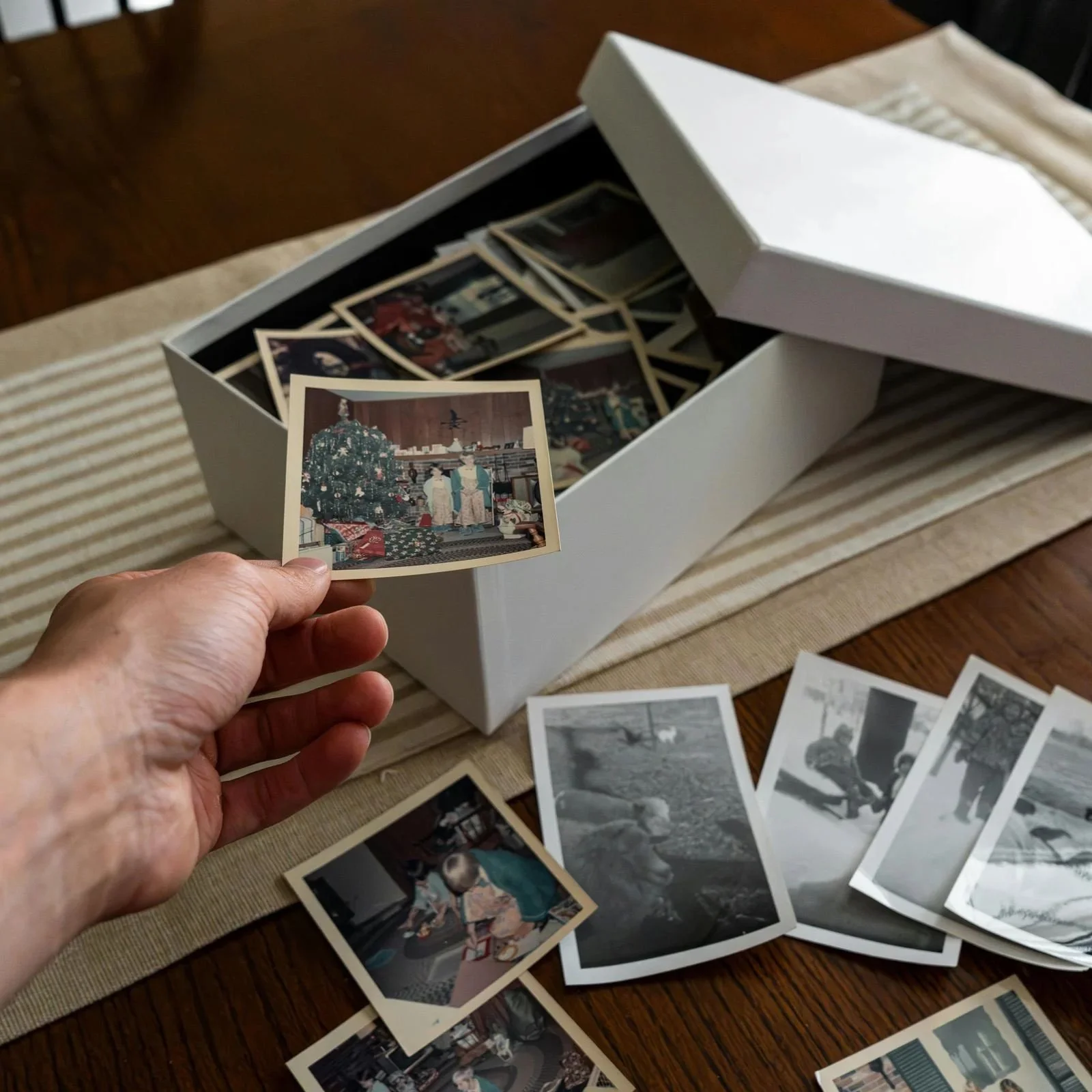
Photographs can tell a story that words sometimes cannot.
You might display pictures from childhood, family gatherings, vacations, military service, work, hobbies, holidays, or other important moments.
Don't feel as though every photograph has to be professionally displayed.
A table with framed photographs can be meaningful. So can a simple collection of pictures that family members can look through.
If you have too many photographs to display, consider creating a slideshow or putting together a digital collection that can be shared with family afterward.
Display Things That Belonged to Them
Sometimes an object can bring back a memory faster than a photograph.
A favorite guitar.
An old fishing rod.
A baseball glove.
A piece of military equipment.
A tool they used every day.
A quilt they made.
A favorite book.
Something they collected.
You don't have to display everything.
Choose a few things that help tell the story of the person you're remembering.
Let People Tell Their Stories
One of the best ways to make a memorial personal is to let the people who knew your loved one tell their stories.
Don't worry if every story isn't serious.
People laughed with your loved one. They probably laughed at your loved one once in a while, too.
That's okay.
A funny story, an unusual habit, a memorable trip, or something they always said can help people remember the person behind the name and dates.
Those stories are part of the life you're remembering.
Choose Music That Means Something
Music can bring back memories in a way that few other things can.
Think about the songs your loved one listened to, sang, played, or enjoyed.
Perhaps there was a hymn that meant something to them. Maybe there was a song they played over and over. Maybe a particular piece of music reminds everyone of a special time.
Use music that helps tell their story.
It doesn't have to fit somebody else's idea of what memorial music should sound like.
Consider a Memory Table or Display
A small display can give people something to look at and talk about as they arrive.
You might include photographs, personal possessions, awards, military items, artwork, sports memorabilia, books, tools, or other things connected with your loved one's life.
It doesn't have to be elaborate.
The purpose isn't to create a museum.
It's simply another way of helping people remember.
Give People a Place to Leave Their Own Memories
Sometimes the people who attend a memorial have stories you have never heard.
Give them an opportunity to share those memories.
A simple guest book can provide a place for people to sign their names and leave a memory, a note, or a message for the family.
It can be especially meaningful later, when the service is over and the family has had some time to begin processing the loss.
A guest book isn't necessary for every memorial, but it can be one useful way to collect the memories of the people who came to remember your loved one.
Don't Try to Include Everything
There may be hundreds of photographs and dozens of stories.
You don't have to use them all.
Choose the things that help tell the story. Give people a chance to participate without turning the memorial into an endless collection of everything your loved one ever did.
Sometimes one photograph, one song, or one good story can say more than a dozen carefully prepared presentations.
“You don't have to tell the whole story. Just tell their story.”
Let the Memorial Reflect the Person
A personal memorial doesn't have to be expensive.
It doesn't require elaborate decorations or professional production.
Look around the house.
Think about the things that mattered to your loved one. Talk with the people who knew them best. Ask what they remember.
Then bring some of those things into the gathering.
A memorial can be simple and still be deeply personal.
You're not trying to create the perfect memorial. You're trying to create a memorial that feels like them.
Take a breath. Think about the person you're remembering.
Tell their stories.
Play their music.
Display their photographs.
Bring out the things they loved.
Give other people a chance to share what they remember.
And when the gathering is over, you'll have done more than conduct a service.
You'll have given people an opportunity to remember a life.